Redefining how restaurants manage on-demand orders.
Overview
OutDish is an end-to-end order management system built for the on-demand food service era — a single command center that syncs a restaurant's counter, kitchen, and online storefront across web, mobile, and every third-party delivery app.
I led design across the entire product, from research through the merchant dashboard, the customer-facing storefront, and the marketing site that sold it.
The Problem
The restaurant industry ended 2020 with total sales $240 billion below the National Restaurant Association's pre-pandemic forecast, and more than 110,000 eating and drinking establishments had closed — temporarily, or for good. Curbside pickup, in-house delivery, third-party delivery, and drive-thru became the means of survival, wherever a restaurant could manage it. Which meant a counter cluttered with a separate tablet for every delivery app, and a kitchen printer for each one.
A counter cluttered with a separate tablet for every delivery app — and a kitchen printer for each one.
The Process
The objective: research, strategize, and design an end-to-end order management system that helps restaurants sell and sync every order — online, mobile, and third-party — in one place, simplifying everything from point-of-sale to staff management, marketing, inventory, and delivery. I broke the work into three phases: empathize, conceptualize, and design.
Empathize
- Every restaurant is different, with unique needs
- Dine-in had been shut down entirely by COVID
- Most restaurants couldn't take orders online at all
Conceptualize
- One device to collect every order, from any channel
- Owners wanted their own branded online store
- Simple enough to use from day one, no training
Design
- Built a design system as a priority, not an afterthought
- Moved forward with a mobile-first approach
- Focused on the ordering experience for both sides
Design System
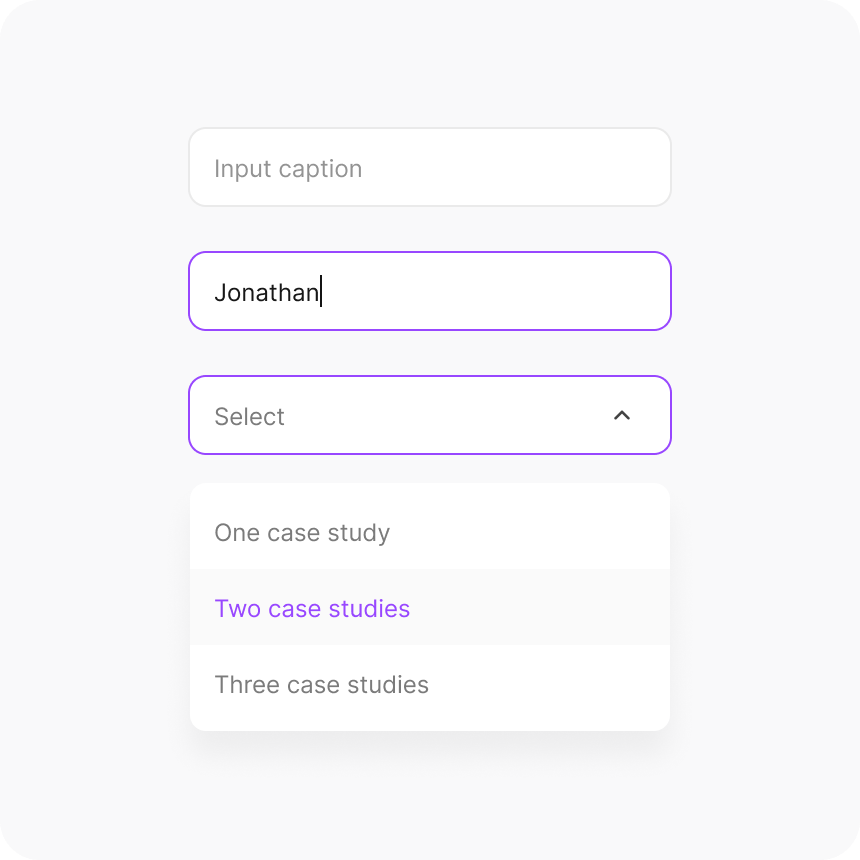
Before any screen got built, I established the design system it would be built from — a shared grid, consistent states for every input, dropdown, toggle, and table, so the merchant dashboard and customer storefront would always read as one product, however fast the team had to move.
A shared grid gave the dashboard and storefront a common skeleton, even though the two products had almost nothing else in common — one dense and operational, the other simple and consumer-facing.

Every input, dropdown, toggle, and table needed a consistent state before a single screen got built, so the team could move fast without reinventing a checkbox every sprint.
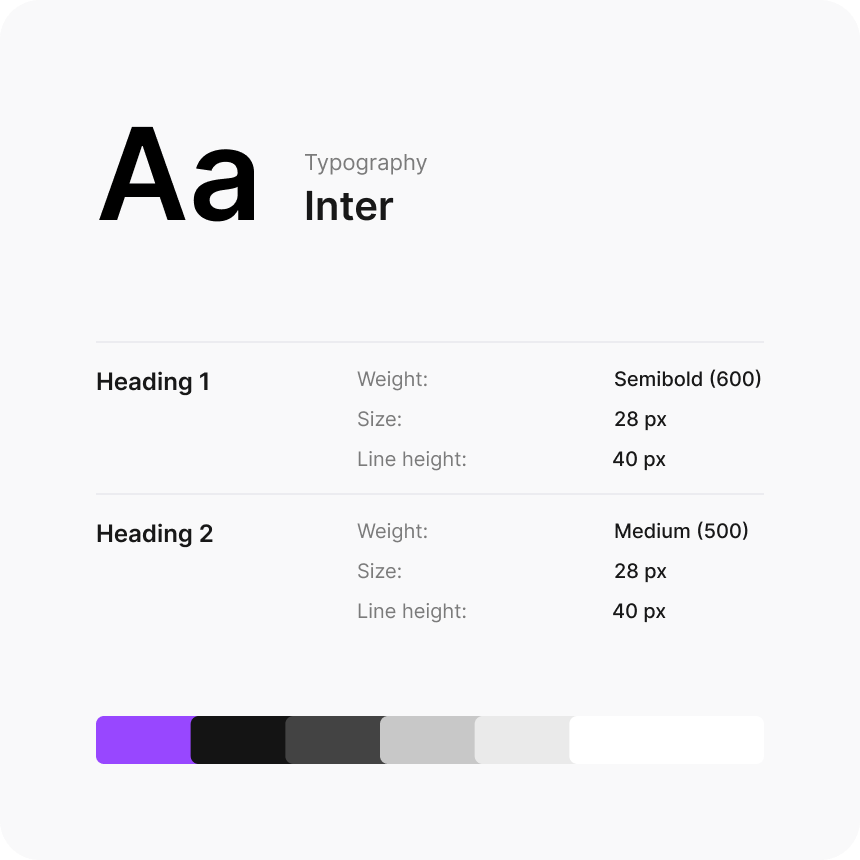
One type scale and palette had to work for two very different jobs — a data-dense merchant dashboard and a browsable customer menu — without ever feeling like two different products.
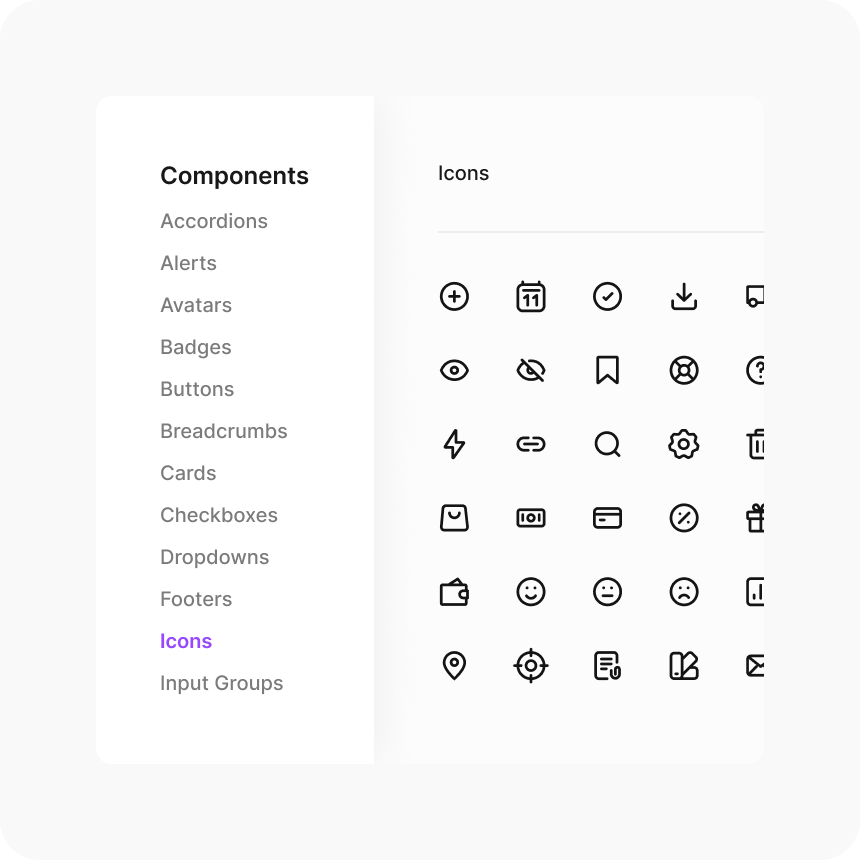
The system that let the dashboard, the storefront, and the marketing site read as one company, no matter which one a person opened first.
Merchant Dashboard
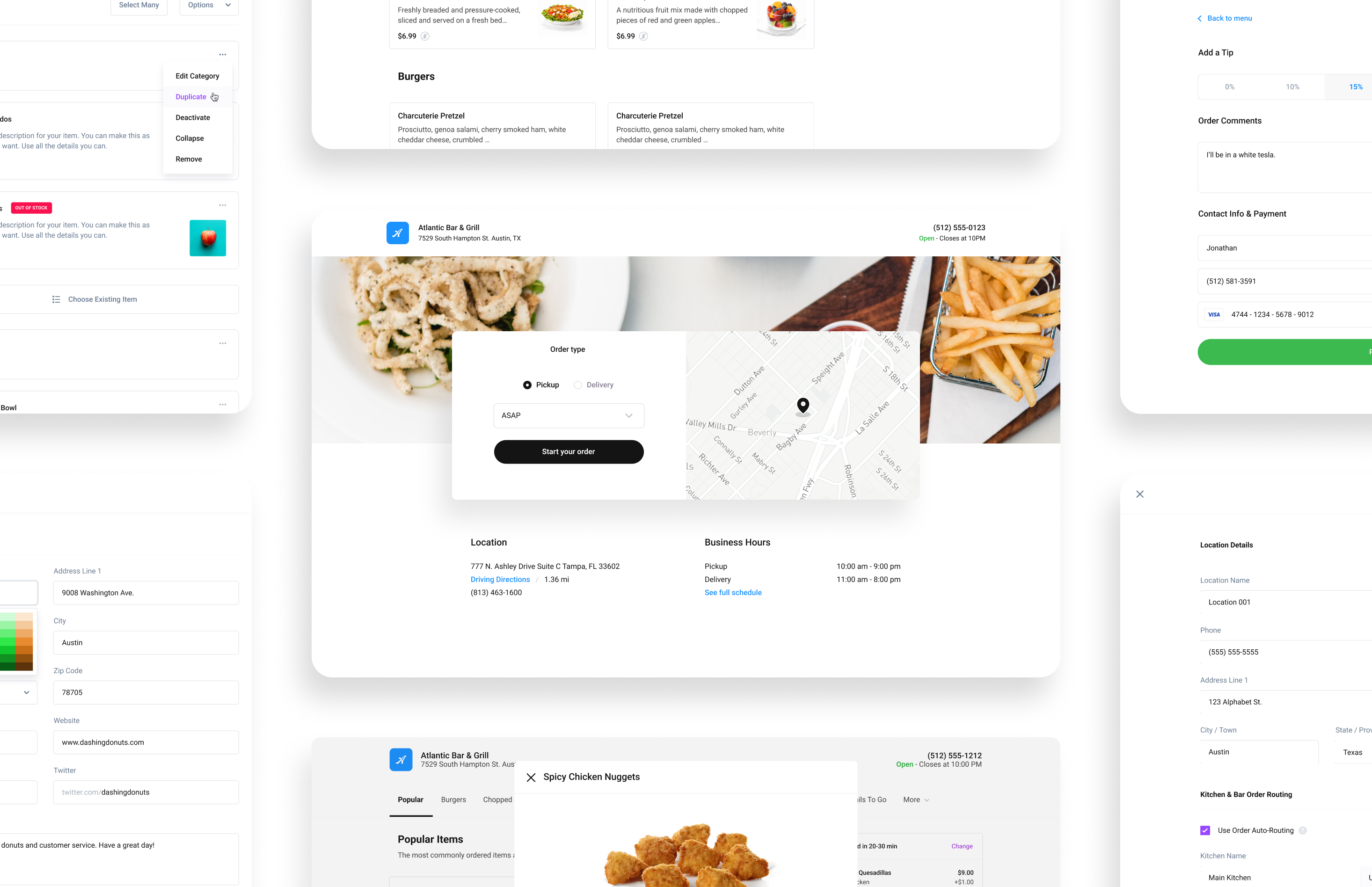
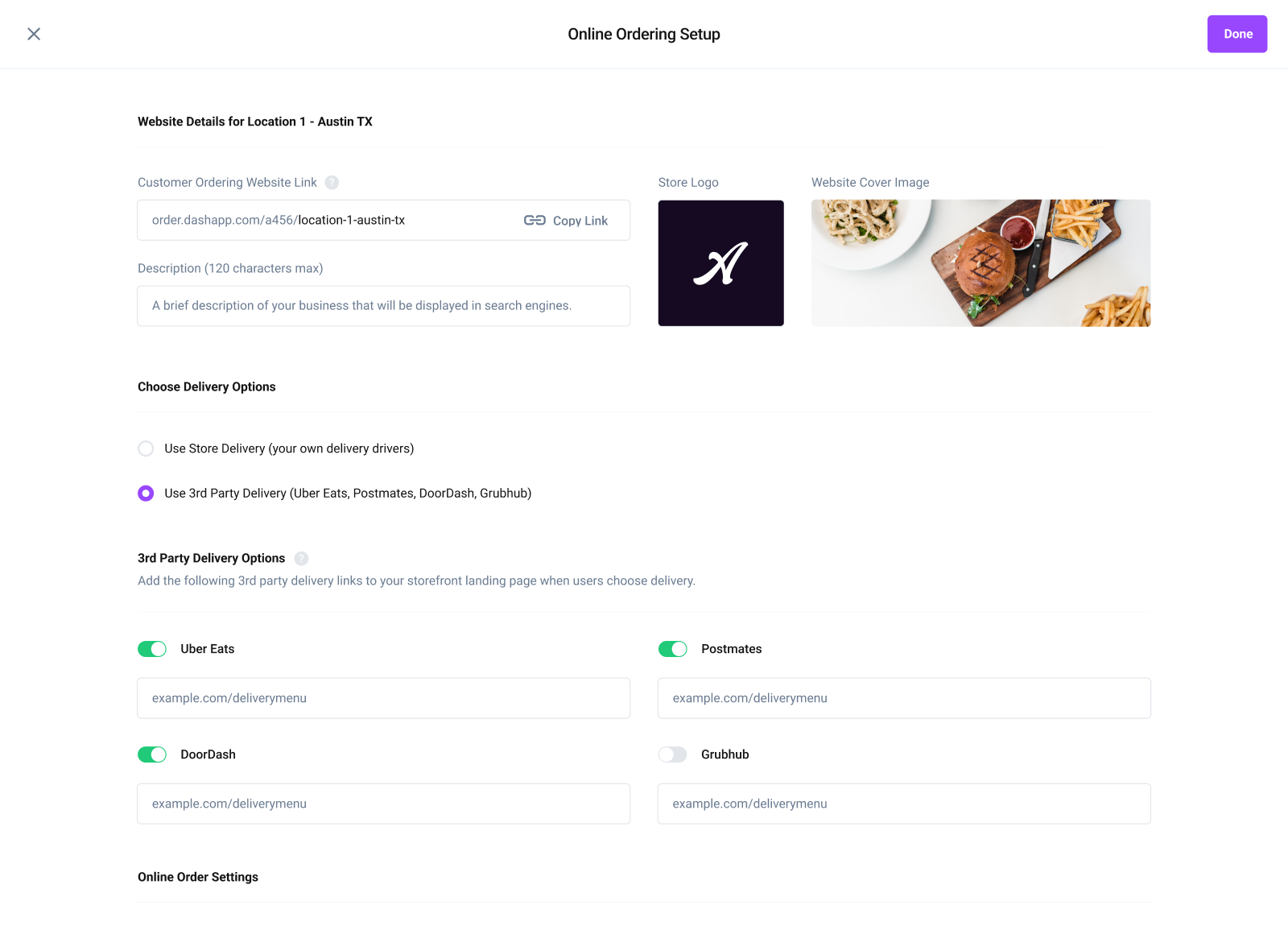
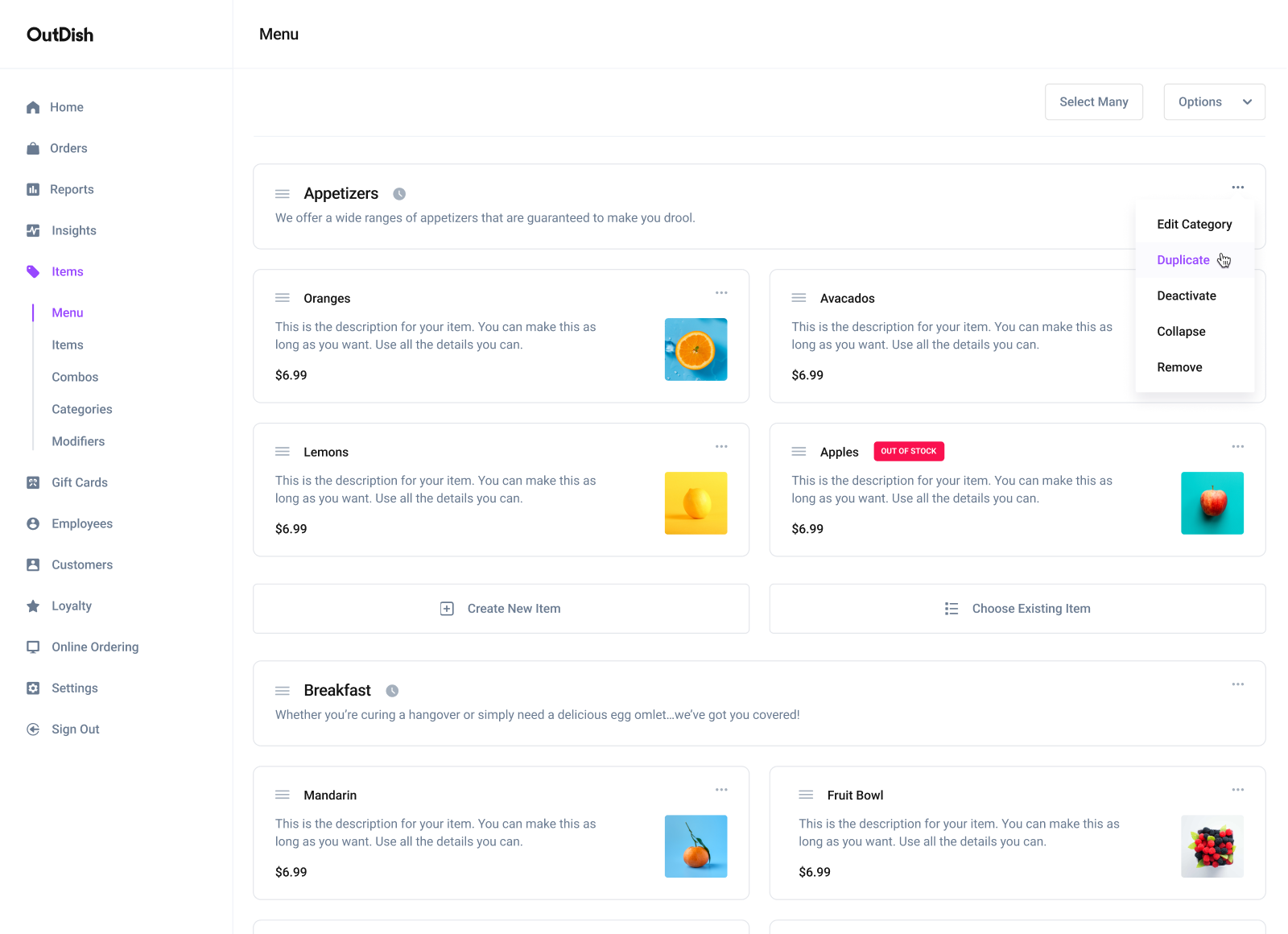
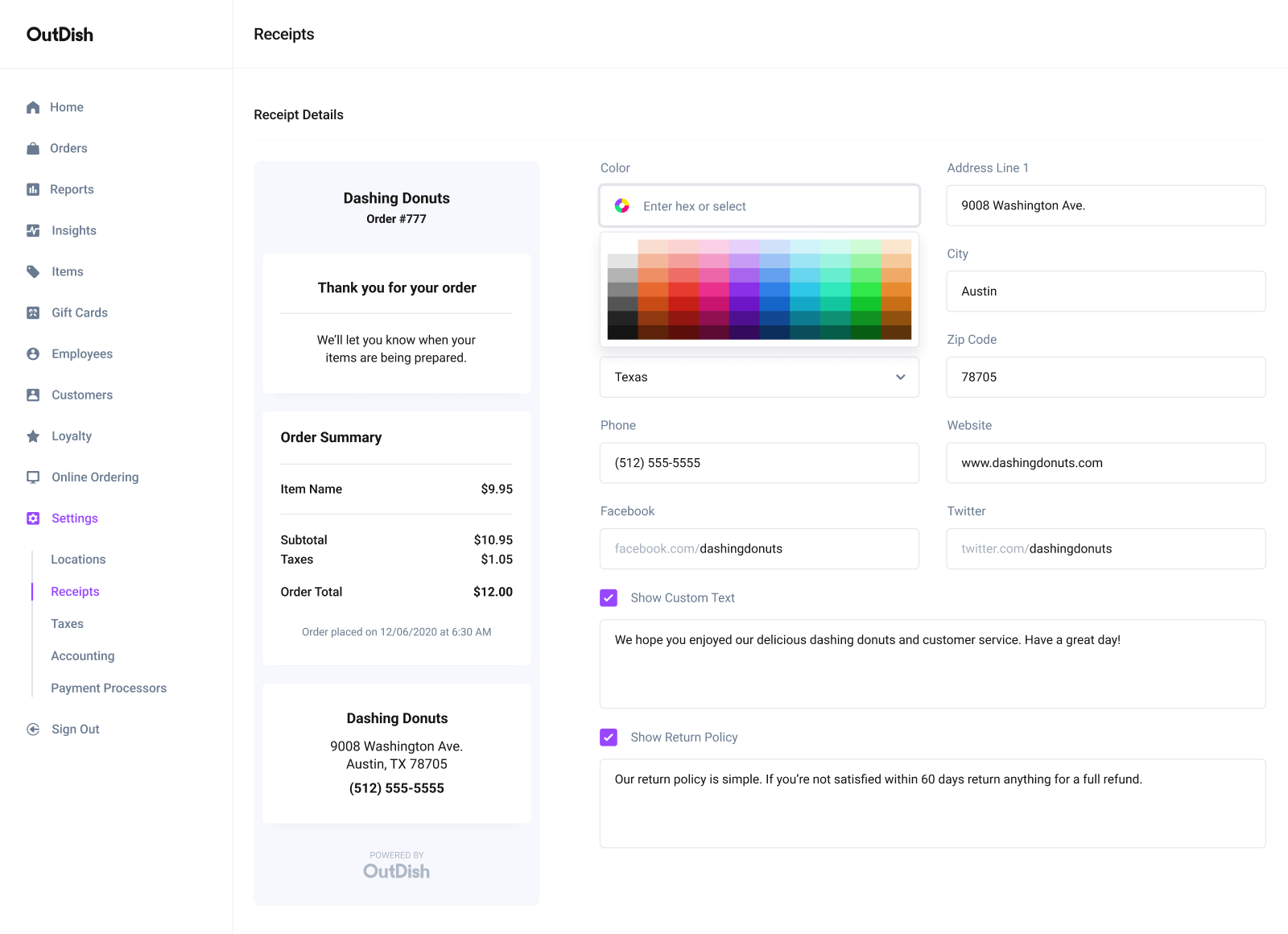
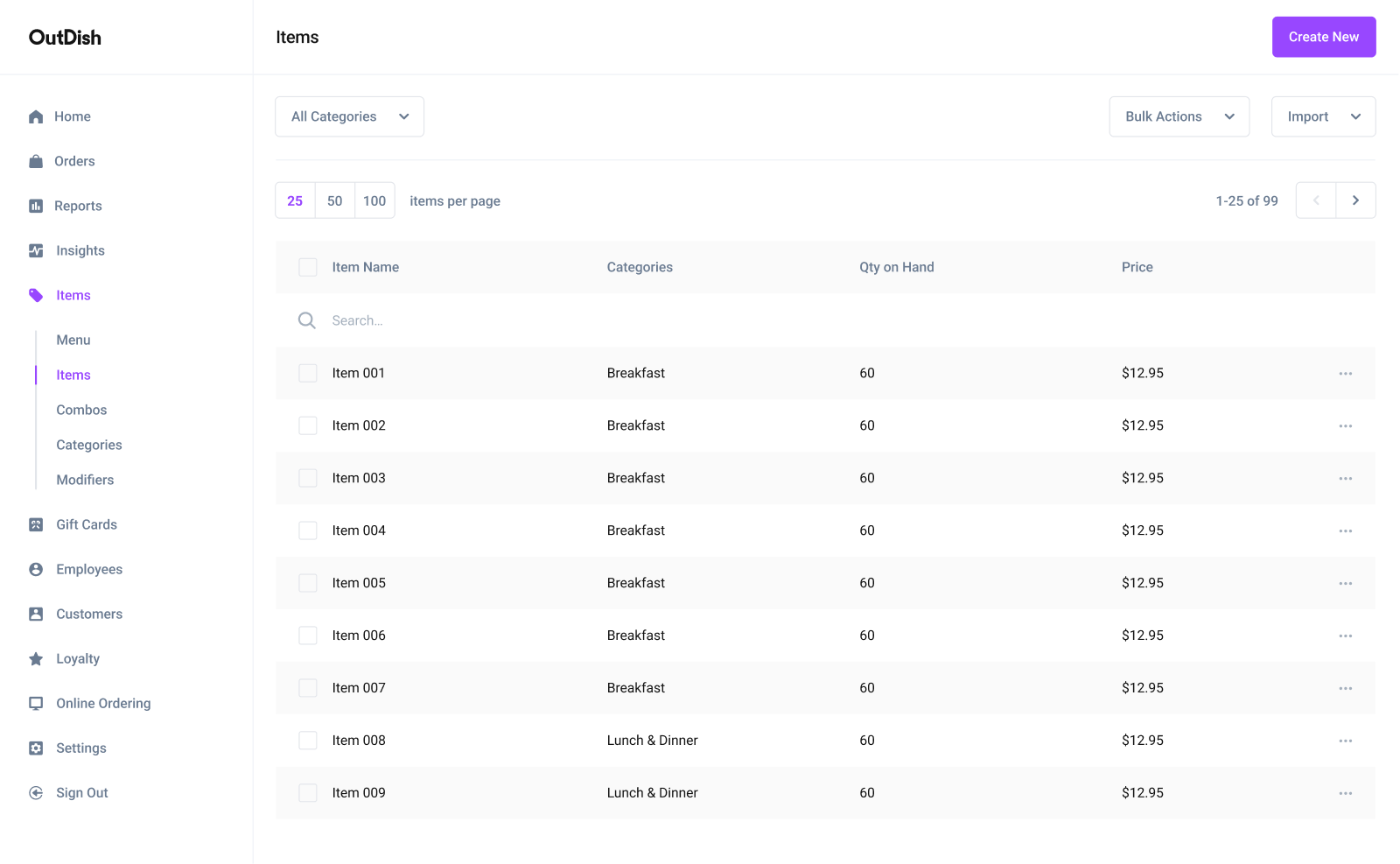
The dashboard is where a restaurant runs everything — menu items and modifiers, store details and kitchen routing, online ordering setup, and receipts — all built to stay simple even as the feature set underneath it grew.
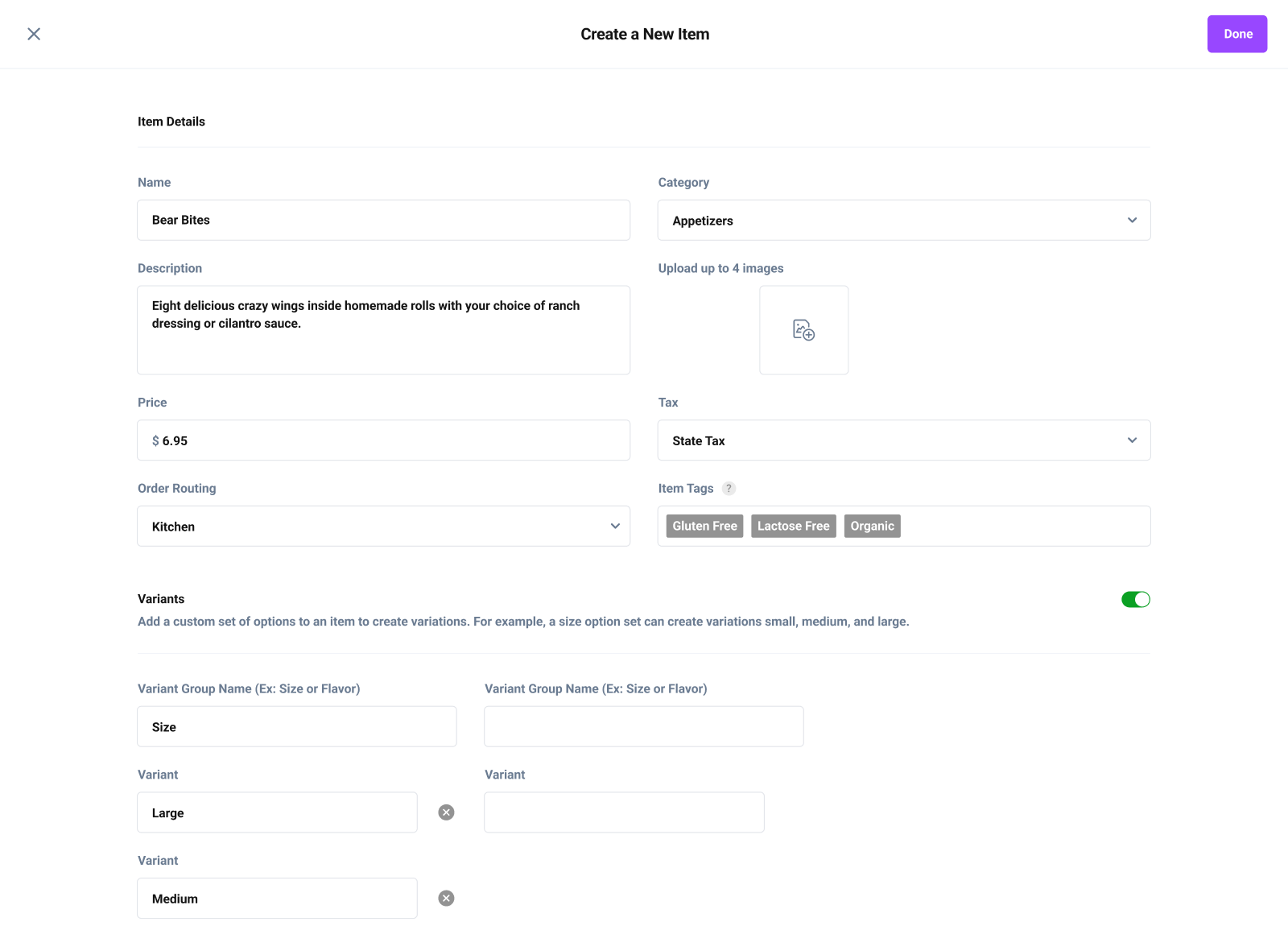
Online Store
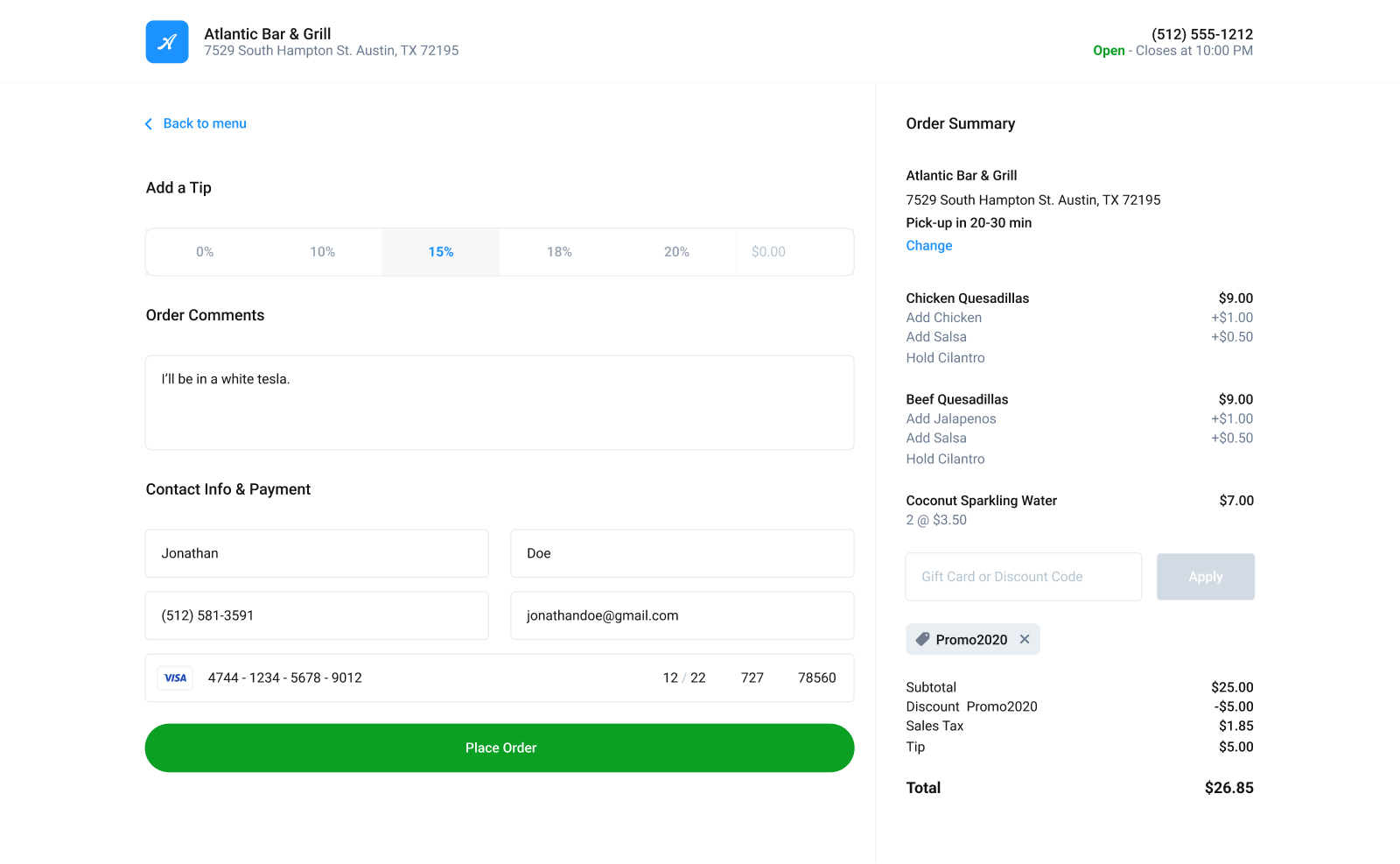
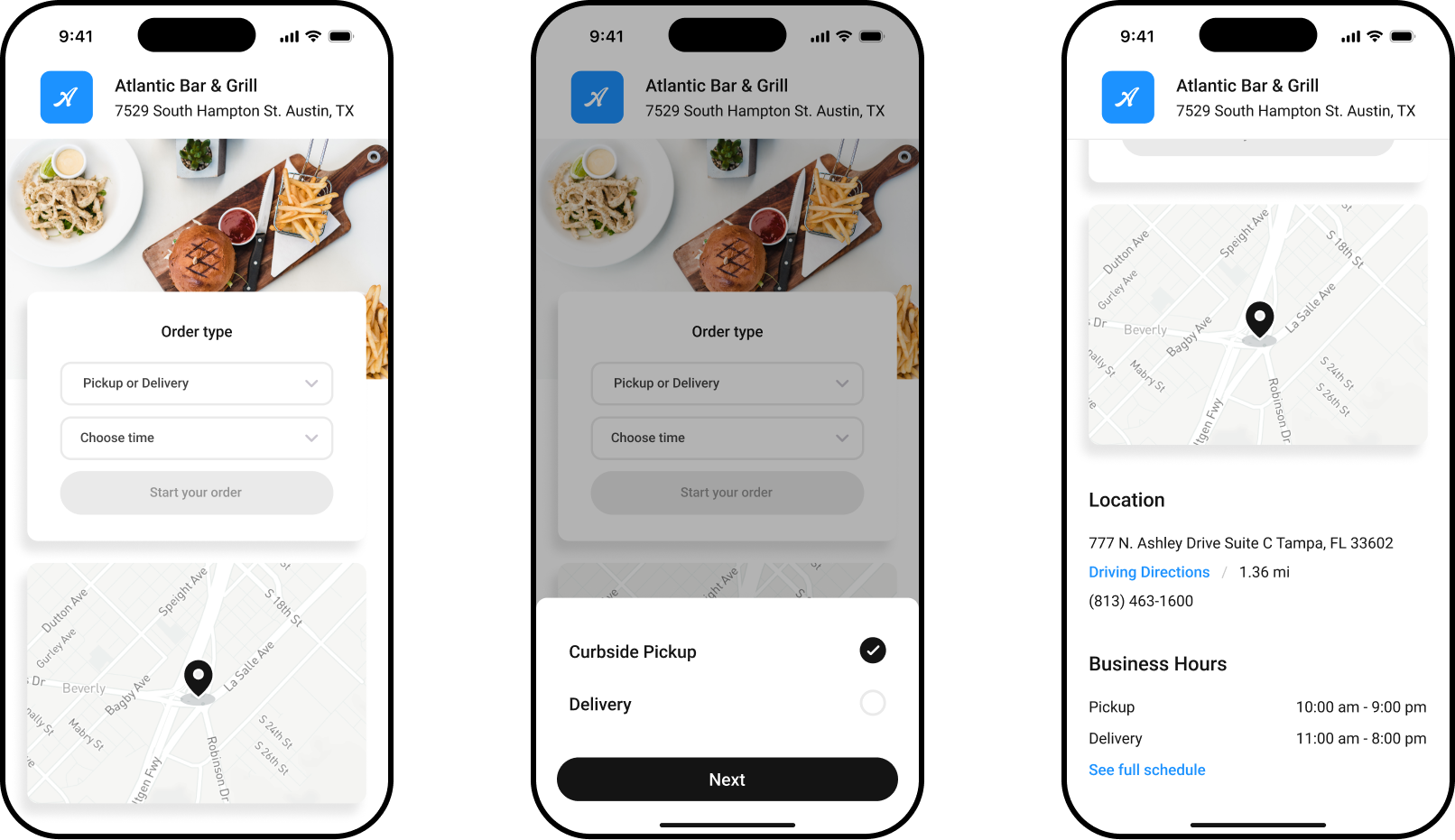
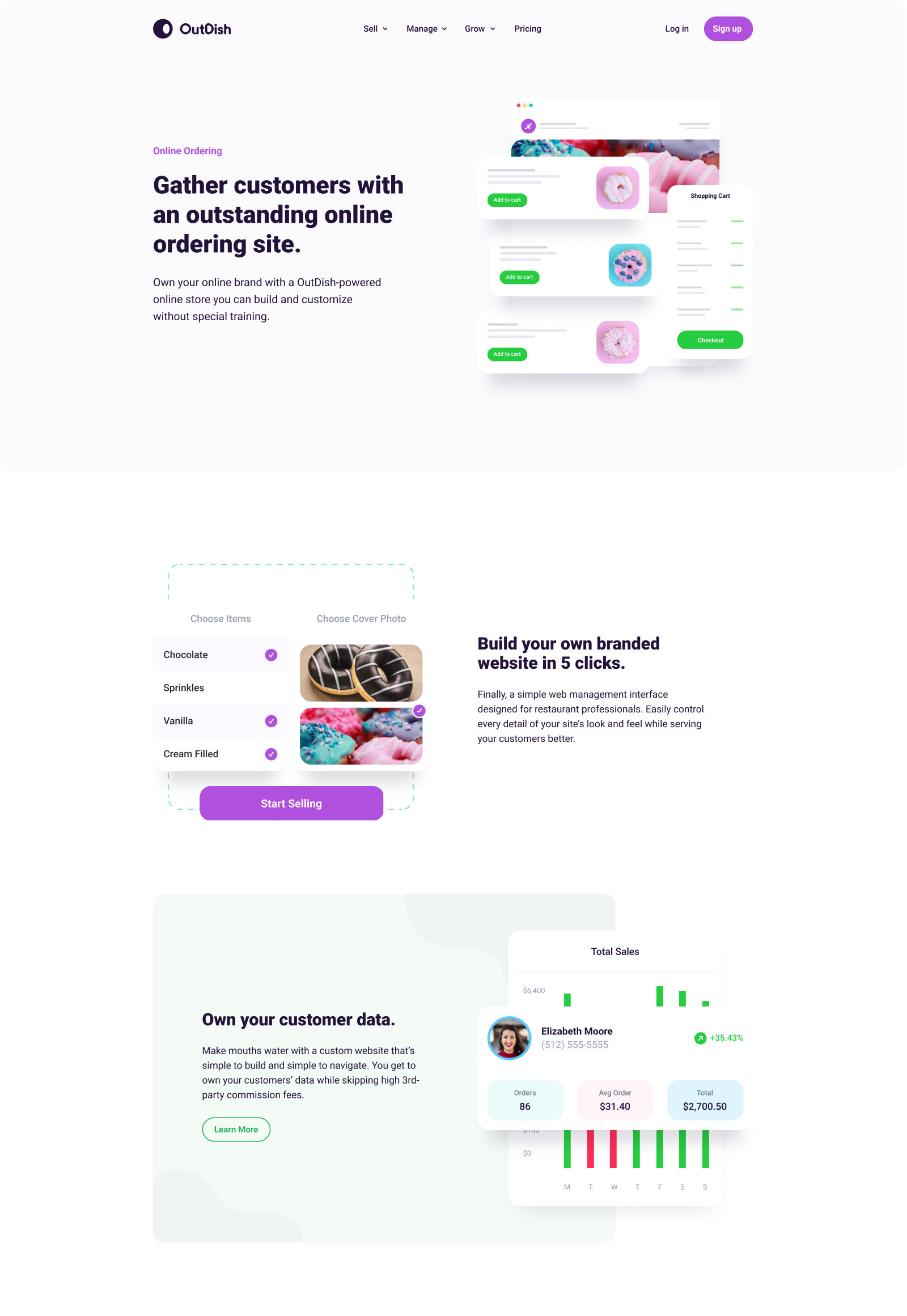
The customer-facing side of that same dashboard — a branded storefront for pickup or delivery, a menu that stays fast to browse, and a checkout built to ask for as little as possible before placing an order.
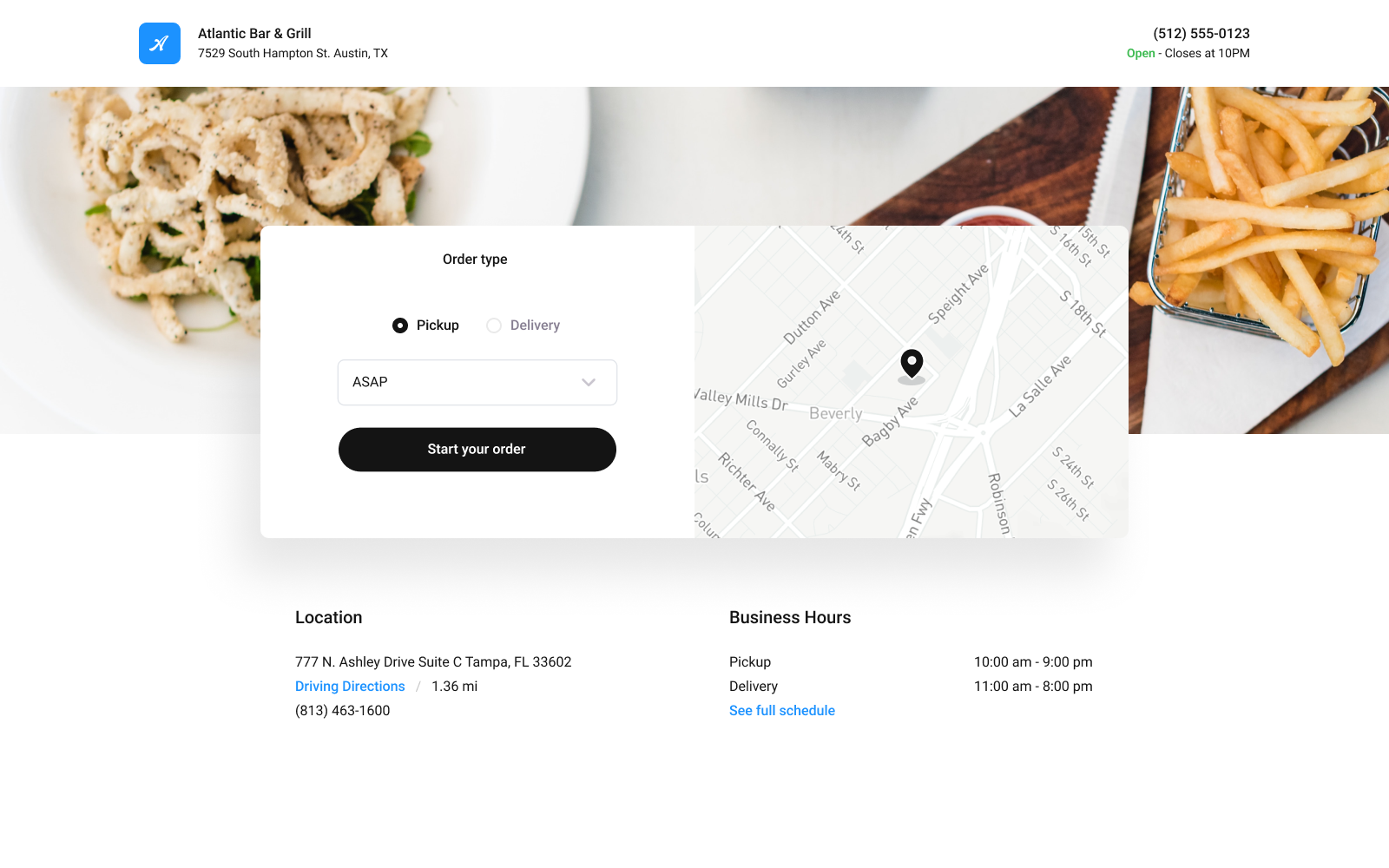
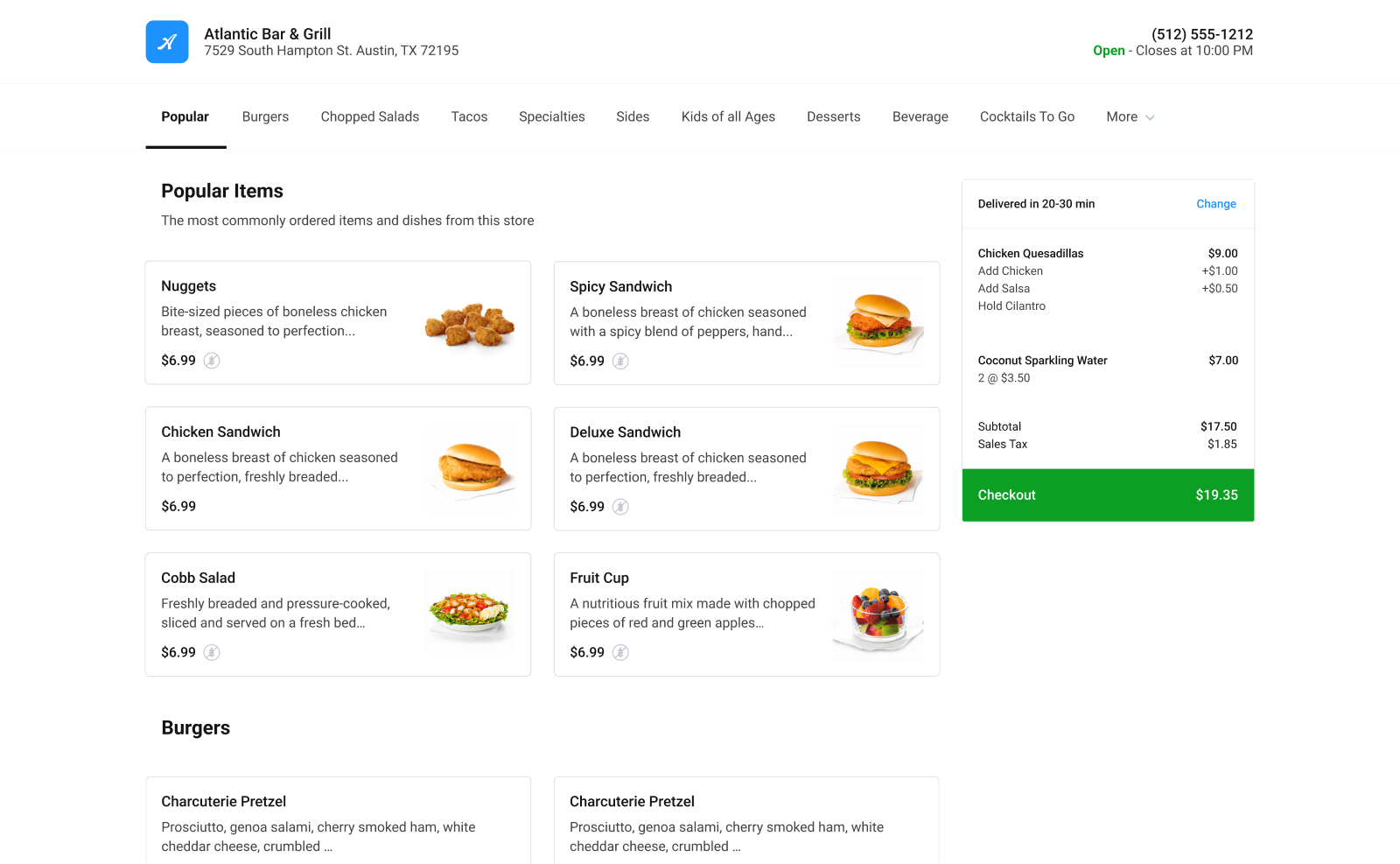
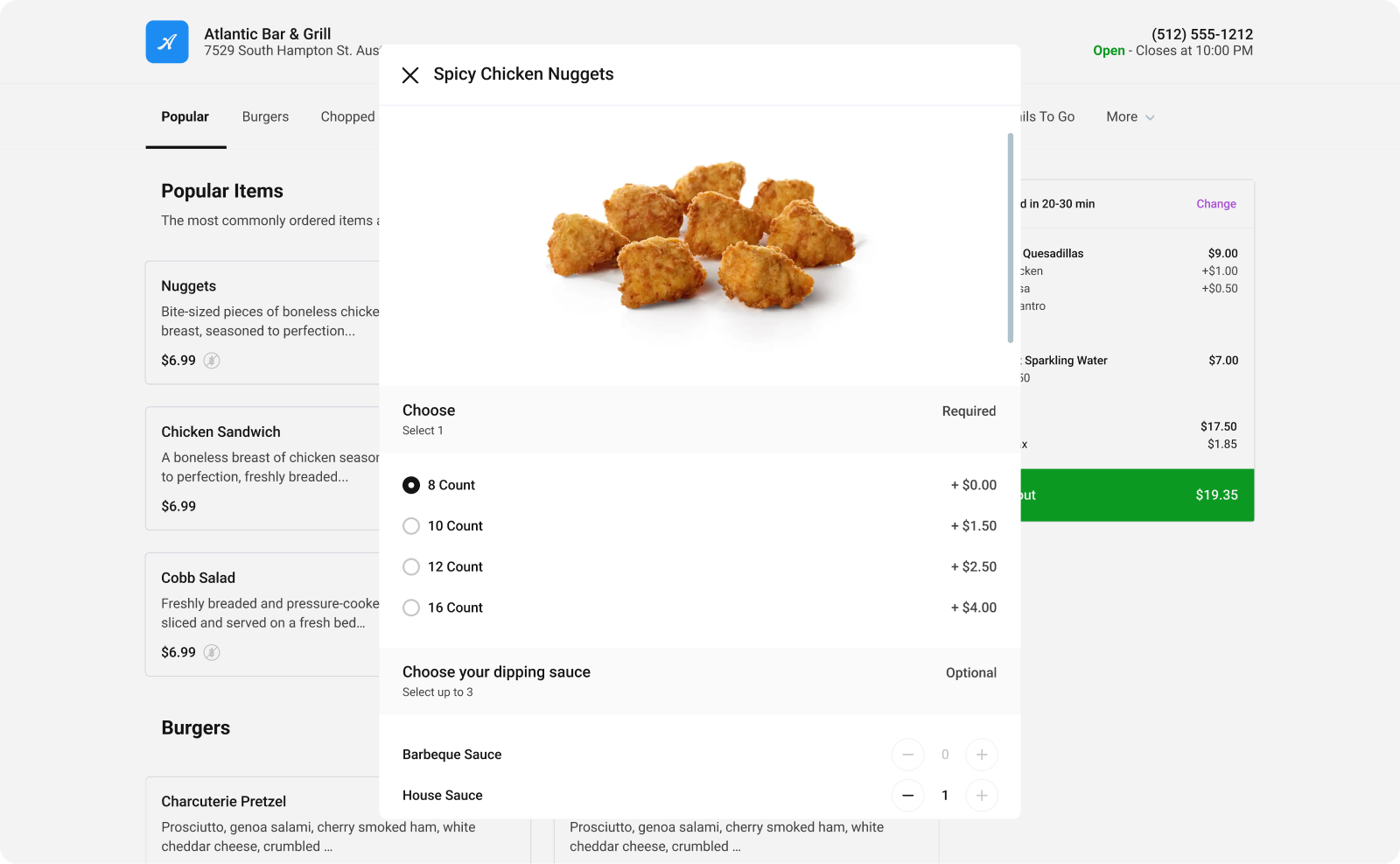
Brand & Marketing
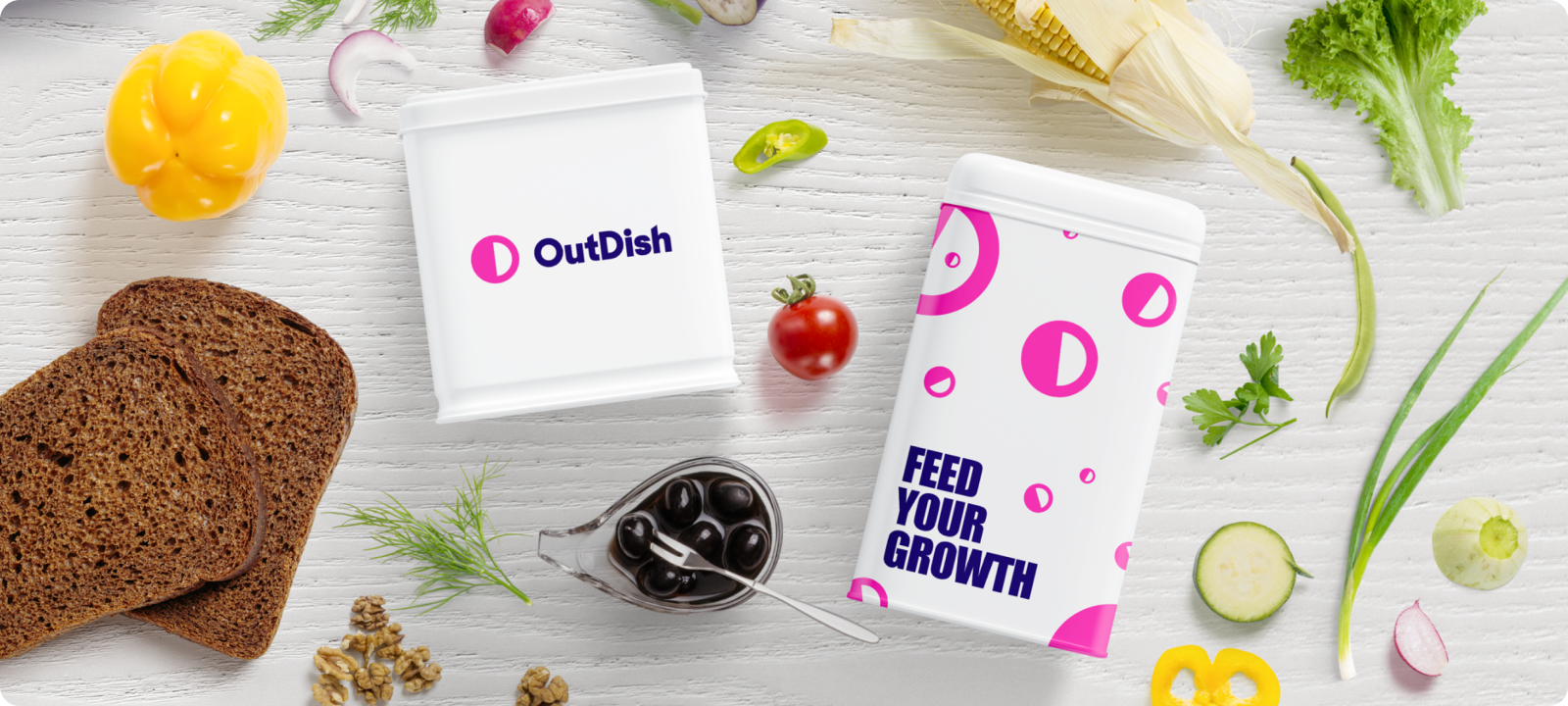
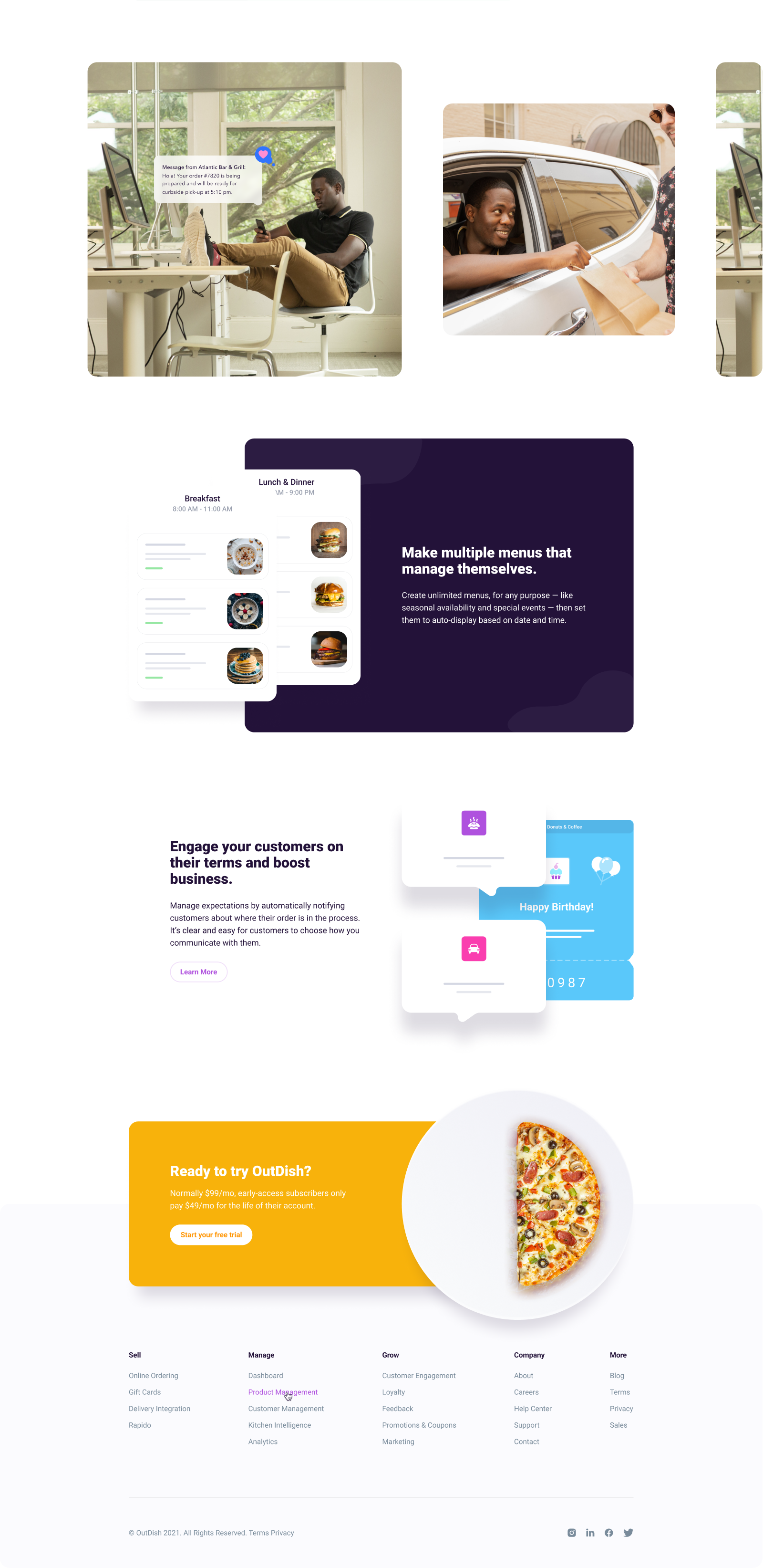
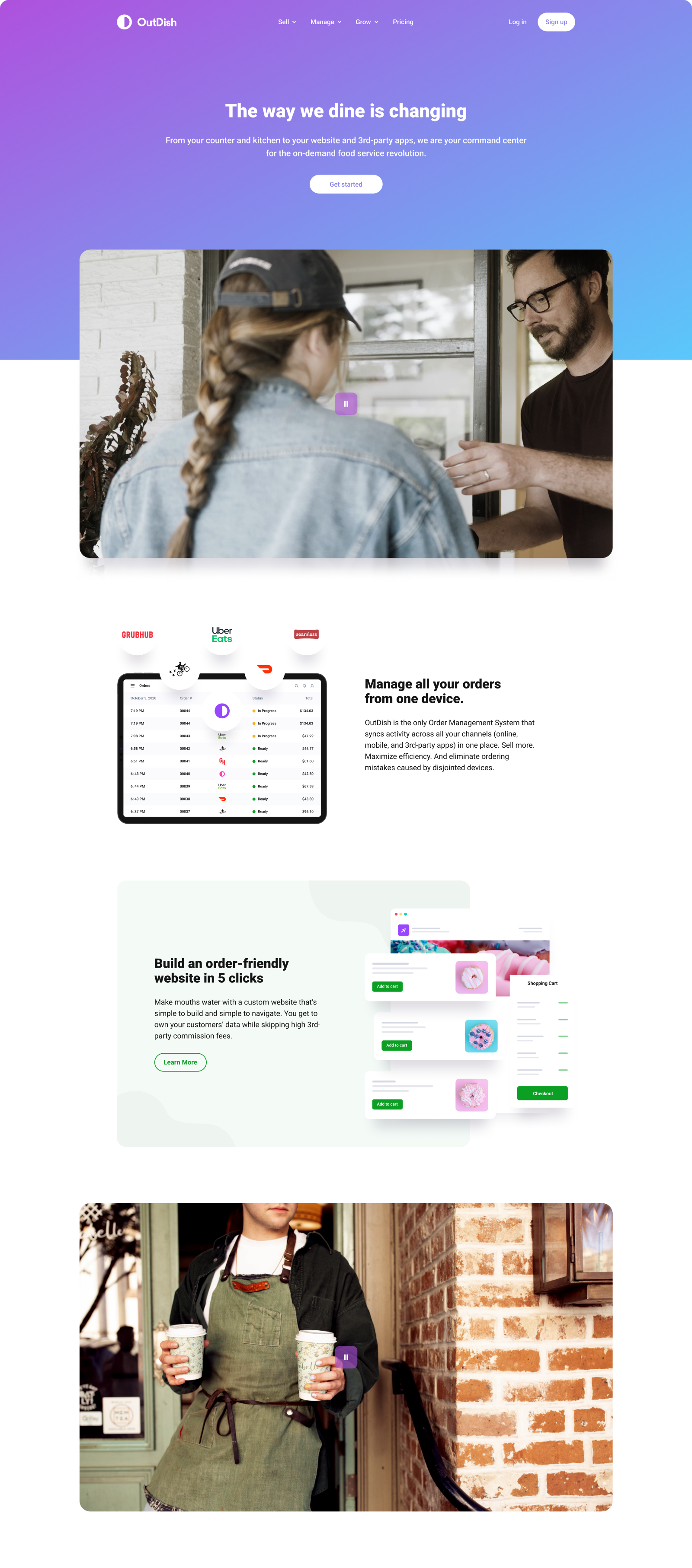
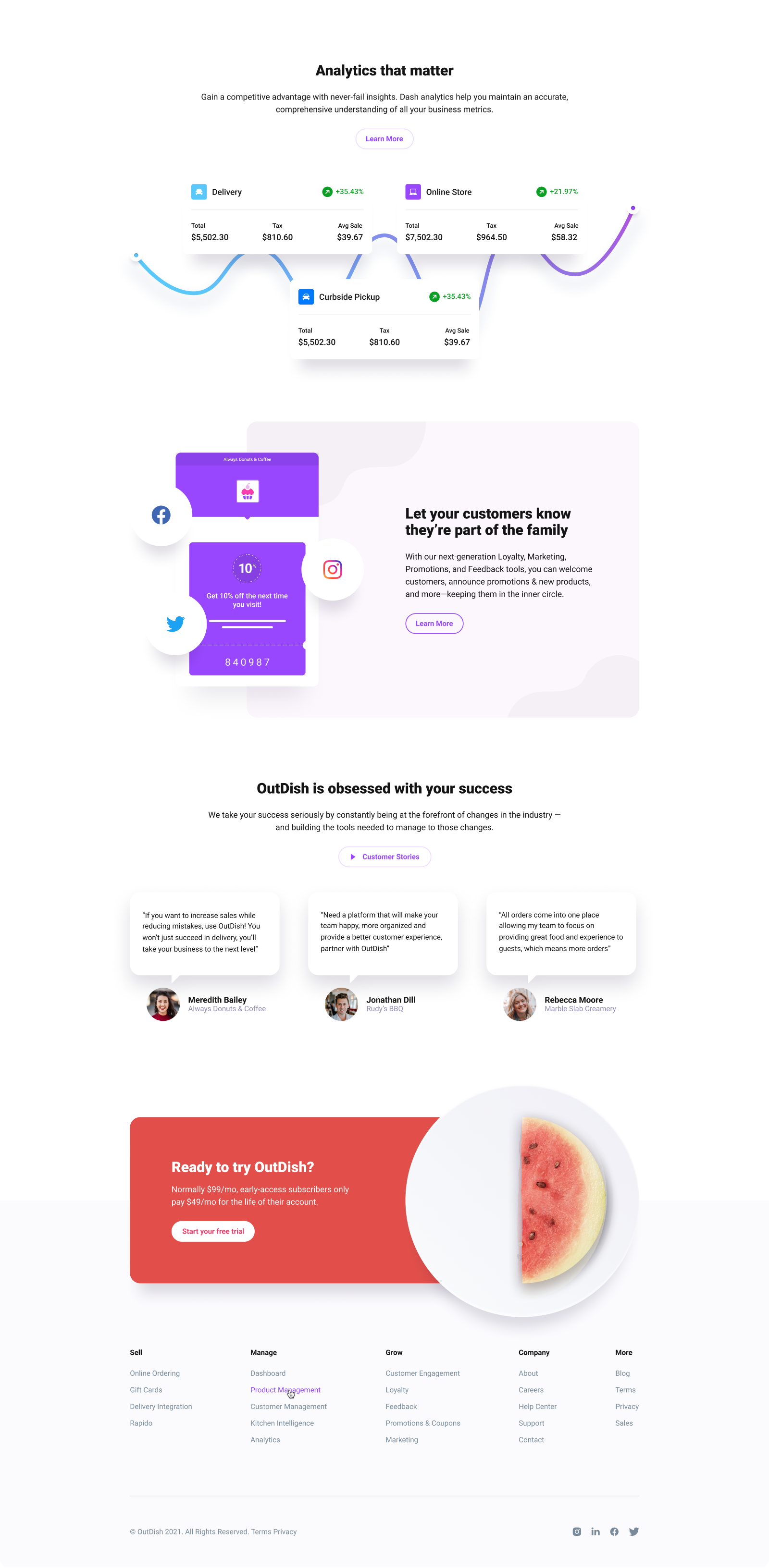
Beyond the product, I helped shape how OutDish looked and sold itself — the identity system, and the marketing site built to turn independent restaurant owners into customers.

The Outcome
OutDish shipped as a full order management system — merchant dashboard, customer storefront, and marketing site — built mobile-first from one shared design system, so an independent restaurant could run every order channel from a single device instead of a counter full of tablets. The tablet stack that started this whole project became the thing it replaced.